
Secondary Glazing vs Replacement Windows: Which Route Suits Your Home?
October 24, 2024How to Reduce Road Noise with Better Windows and Glazing
December 9, 2024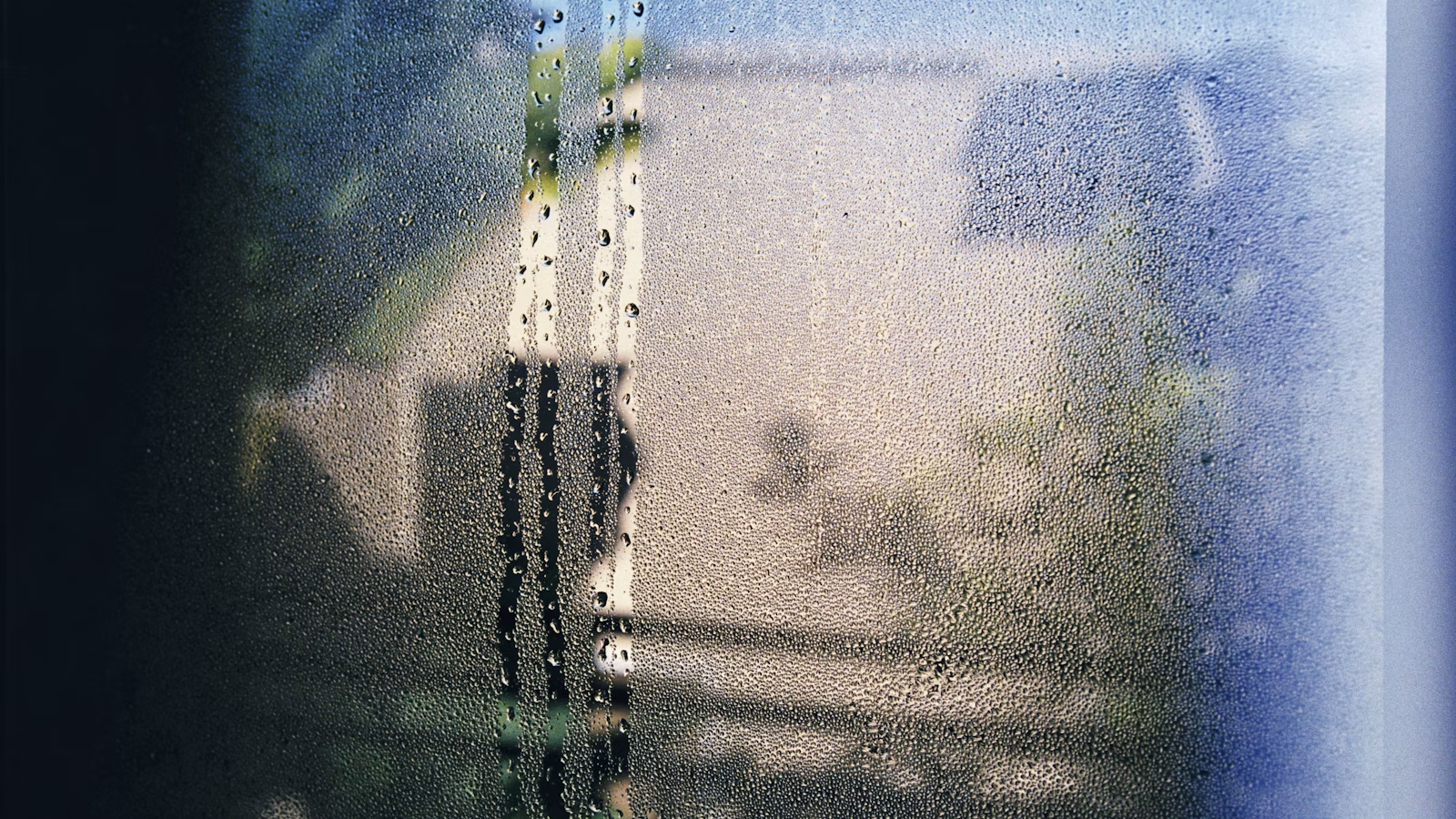
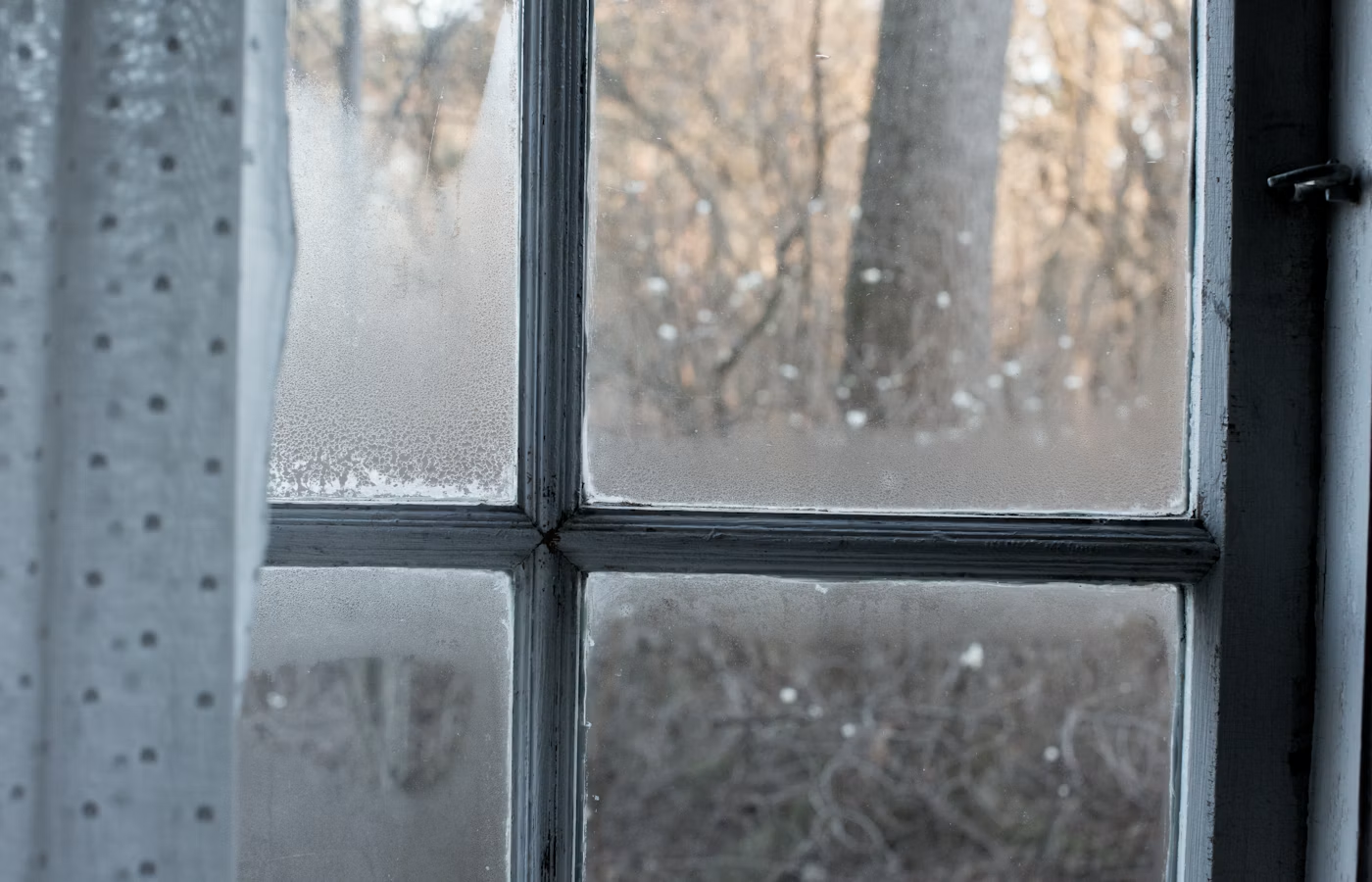
Condensation is one of the most misunderstood window problems. Moisture on the room side of the glass, misting on the outside pane and condensation trapped inside a sealed double-glazed unit can look similar at first glance, yet they have very different causes. Knowing where the water is forming is the first step towards deciding whether you need to change your ventilation habits, repair a glazing unit or consider replacement windows.
For product context, compare Oakview’s uPVC Windows with Double Glazing & Secondary Glazing. For independent background reading, see Energy Saving Trust.
Why window condensation needs a project-specific decision
Understanding where condensation forms and what each location can tell you. That is why a specification that works perfectly in one property may be unnecessary, visually wrong or technically unsuitable in another. London housing ranges from Victorian terraces and inter-war suburbs to apartments and new extensions, so the existing construction should drive the solution rather than a generic online recommendation.
Start with the building. Look at orientation, exposure, wall construction, reveal depth, existing cills, opening sizes and how the room is used. Then define what you want to improve: warmth, noise, security, maintenance, daylight, architectural character or a combination of those goals. Once the priorities are ranked, it becomes much easier to compare uPVC Windows and Double Glazing & Secondary Glazing without being distracted by features that do not materially improve your project.
The five specification points worth checking
Indoor humidity and surface temperature should be treated as part of the whole opening rather than an isolated feature. That matters because window condensation is not simply a product choice: the frame, glazing, hardware and junction with the building all work together. Ask the surveyor to explain what is included, why it is appropriate for the property and how it will be checked at installation.
One of the most useful checks is why efficient external panes can mist outside. It is worth looking at a real sample or completed installation where possible. Brochure photographs rarely show frame depth, seals, junctions and scale clearly enough to judge how the finished work will feel in the room and from the street.
When comparing quotations, pay close attention to failed seals and moisture between panes. The practical question is not whether a feature sounds premium, but whether it solves a real need on your project. A clear written specification protects both the homeowner and installer because it turns assumptions into details that can be measured and checked.
For this type of project, ventilation and background air movement often has a bigger effect than homeowners expect. This is also where two apparently similar quotations can diverge. One may include upgraded glass, specialist hardware, trims or additional preparation while another may price only the basic unit. Like-for-like comparison prevents surprises later.
A well-resolved specification makes when frame condition matters as much as the glass explicit before manufacture. Small decisions made before ordering usually cost less than alterations on site. Confirm dimensions, finishes, opening direction, glass, handles and any planning or access constraints while there is still time to change the design.
How the window or door interacts with the building
Performance is created at the junction between the product and the property. A well-made window condensation solution still needs accurate surveying, suitable tolerances, reliable mechanical fixing, appropriate perimeter insulation and weather sealing, and neat internal and external finishing. The surrounding wall must also be in good enough condition to receive the new frame.
Ask how the installer will deal with existing finishes, damaged reveals, old sealants, cills, damp-prone areas and access. On a ground-floor opening those questions may be straightforward; on an upper-floor flat or a large glazed opening they can change the method, programme and cost. If scaffolding, lifting equipment or temporary protection is required, it should appear in the scope before work begins.
For replacement work, compliance is another part of the building interface. The Planning Portal – Building Regulations explains that replacement windows and external doors are controlled fittings under the Building Regulations in England. Where planning constraints may apply, the Planning Portal is a useful starting point, but property-specific advice should come from the relevant local authority.
What to compare when you receive quotations
A quotation is easier to assess when every supplier has priced the same brief. Ask for the material and profile system, opening configuration, glass make-up, colour inside and out, hardware finish, handles, ventilation components, cills, trims, removal and disposal of old frames, making good, access equipment and the route for Building Regulations compliance. If any of those items are excluded, the saving may only be temporary.
Do not be afraid to ask for drawings or marked-up elevations on a larger project. They help catch opening-direction errors, inconsistent glazing bars and mismatched frame arrangements before manufacture. For colour-critical work, physical finish samples viewed against the building are more reliable than a screen. For period work, photographs of the existing windows are useful evidence when deciding proportions and decorative details.
Common mistakes to avoid
- Treating all condensation as failed double glazing. Resolve this in the written specification rather than leaving it to an assumption on installation day.
- Blocking trickle ventilation to stop cold air. Resolve this in the written specification rather than leaving it to an assumption on installation day.
- Drying laundry without managing humidity. Resolve this in the written specification rather than leaving it to an assumption on installation day.
- Ignoring persistent moisture around reveals and wall finishes. Resolve this in the written specification rather than leaving it to an assumption on installation day.
Another common mistake is trying to optimise one number at the expense of the whole project. The smallest sightline, lowest U-value, highest security label or lowest price is not automatically the right answer if it creates compromises elsewhere. Good fenestration design is a balance of appearance, comfort, operation, durability, regulation and budget.
A practical survey checklist
- Photograph every elevation and note which rooms each opening serves.
- Record whether the priority is warmth, noise, security, maintenance, daylight or heritage appearance.
- Confirm opening styles and which sashes or doors must provide purge ventilation or escape.
- Check planning status, listed status, conservation area controls and any leasehold permissions.
- Agree frame material, external and internal colour, glazing bars, hardware and glass.
- Ask how existing frames will be removed and how reveals, cills and decoration will be protected.
- Confirm disposal, making good, access equipment and final cleaning.
- Keep the quotation, drawings, compliance paperwork and warranty together after completion.
Why local context matters in London and the M25 area
Properties across London and the surrounding M25 area can vary significantly even within the same street. Bay windows, brick reveals, rendered facades, stone cills, conservation controls, flats above commercial premises and rear extensions all create different constraints. That is why Oakview’s survey-led approach is useful: the product choice can be considered together with the existing building and the practical installation route.
If you are comparing options, start with the relevant Oakview pages for uPVC Windows and Double Glazing & Secondary Glazing, then use the contact page to arrange a discussion about sizes, finishes and installation. Product specifications can change, so final performance data and options should always be confirmed for the exact system being quoted.
Frequently asked questions
Is condensation on the outside of a window a defect?
Usually not. External condensation can occur when the outer pane becomes cool enough for moisture in outdoor air to condense on it.
What if moisture is between two panes?
Persistent misting between panes usually points to a loss of seal in the insulated glass unit and should be inspected.
Can new windows eliminate all condensation?
No. Windows can improve surface temperatures and airtightness, but indoor humidity and ventilation still need to be managed.
Can Oakview advise on the most suitable option?
Yes. The useful starting point is a survey and a clear description of what you want to improve. Oakview can then relate those priorities to the available uPVC Windows and Double Glazing & Secondary Glazing options, subject to the requirements of the property.
Final thought
Window Condensation Explained: Inside, Outside and Between the Panes is ultimately a design-and-performance decision, not just a product purchase. Define the problem first, compare complete specifications rather than isolated features, and make sure the installation and compliance route are included in the conversation. That approach produces a result that looks appropriate, works properly and is easier to maintain over the long term.
Planning a project? Contact Oakview Window Company to discuss the property, or explore the full windows and doors service range.
